

Smooth, healthy-looking skin is not necessarily the result of using more skincare products. Sometimes, the missing step is choosing the right exfoliation method and understanding how to use it correctly. Dead skin cells naturally collect on the skin’s surface, contributing to a dull appearance and uneven texture. Regular, appropriate exfoliation can help remove some of this buildup and make the skin feel smoother.
Microdermabrasion is one method designed to address surface-level concerns. Traditionally performed in dermatology offices and professional skincare settings, it is also available through at-home devices. These tools give consumers another way to incorporate physical exfoliation into their routines, but they require careful use.
Understanding the difference between professional treatments and home devices, choosing suitable equipment, and following a gentle aftercare routine are all important. With realistic expectations and a focus on skin safety, at-home microdermabrasion can become a considered part of a broader skincare approach.
What Is Microdermabrasion?
Microdermabrasion is a non-invasive exfoliation procedure that removes some of the outermost layer of dead skin cells. Professional treatments generally use a handheld device to exfoliate the skin while applying controlled suction. The procedure is commonly used to improve the appearance of dullness, uneven texture, and certain superficial skin concerns.
The American Academy of Dermatology explains that professional microdermabrasion can help create a smoother and more radiant-looking complexion after a series of treatments. Results vary between individuals, and the procedure does not address every skin concern.
At-home microdermabrasion devices are designed to bring a similar general approach into a personal skincare routine. However, they should not be considered identical to treatments performed by a dermatologist. Professional equipment, treatment intensity, and individual assessment can differ significantly from consumer devices.
How Does the Exfoliation Process Work?
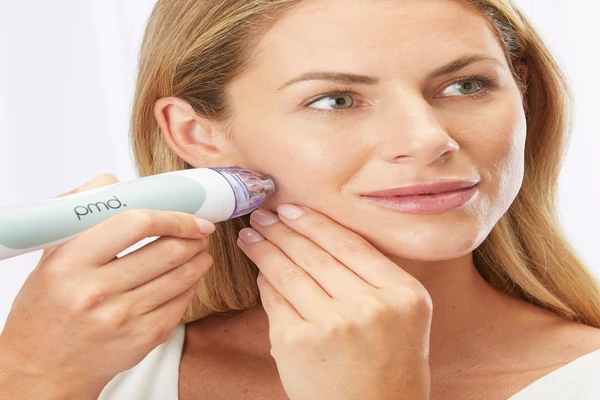
Microdermabrasion uses physical exfoliation to loosen and remove dead surface cells. Depending on the device, this may involve an abrasive tip or a rotating disc. Some devices also use suction to help lift the skin gently against the treatment surface.
Removing accumulated surface cells can make the skin feel softer and appear more refreshed. It may also help skincare products spread more evenly across the surface. However, exfoliation does not guarantee deeper product penetration or permanent changes to the skin.
It is important to remember that the skin has a natural protective barrier. Removing too many surface cells or applying excessive friction can disrupt that barrier, leading to irritation, dryness, and sensitivity. Effective exfoliation is therefore about using an appropriate method rather than pursuing the strongest possible treatment.
At-Home Exfoliation vs. Professional Microdermabrasion
One of the most important decisions is understanding whether a home device or a professional treatment better suits your needs. Both approaches involve exfoliating the outer skin layer, but they differ in equipment, supervision, and treatment customization.
A dermatologist can assess skin conditions, review medications, and determine whether microdermabrasion is appropriate. This matters for people with persistent acne, unusual skin changes, a history of scarring, or other concerns that may require medical attention.
At-home devices, on the other hand, are intended for personal use according to the manufacturer’s instructions. They may offer convenience and greater control over when a person performs a treatment, but they also place responsibility on the user to follow safety directions.
Before choosing either option, consider the following differences:
- Professional assessment: A dermatologist can evaluate your skin and identify conditions that may make exfoliation unsuitable.
- Equipment and intensity: Professional procedures use clinical equipment, while home devices are designed for consumer use.
- Convenience: Home devices can fit into a personal routine, provided the user follows the recommended schedule.
- Treatment planning: A professional can adjust a treatment plan based on your skin’s response and individual needs.
Neither option should be selected simply because it promises faster results. The best approach depends on your skin condition, treatment goals, and ability to follow appropriate aftercare.
What to Look for in an At-Home Microdermabrasion Device
Choosing an exfoliation device requires more than comparing appearance or price. Its design, treatment settings, included accessories, and instructions can all influence how practical it is for regular use.
A device with adjustable settings may offer more flexibility than one with a single intensity level. Different skin areas can also have different needs, so accessories designed for specific applications may be useful. Clear instructions are equally important, particularly for people who have never used a microdermabrasion tool.
Adjustable Intensity and Treatment Control
Not every user needs the same exfoliation intensity. Someone new to mechanical exfoliation may need a more conservative starting point, while a person familiar with the method may have different preferences.
Adjustable speed and suction settings can provide more control over the treatment experience. However, having multiple settings does not mean that higher intensity is better. The lowest suitable setting is generally a more sensible starting point for a new user, provided the device instructions support that approach.
Disc and Attachment Options
Some devices use interchangeable exfoliating discs or caps. These components may be designed for different treatment areas or levels of exfoliation. Before purchasing, check what is included and whether replacement accessories are available.
A useful device should also be straightforward to clean and maintain. Reusable components must be handled according to the manufacturer’s hygiene instructions to reduce the risk of contamination and skin irritation.
Ease of Use and Practical Design
A complicated device can make a simple skincare routine difficult to maintain. Look for clear operating instructions, manageable controls, and a design that feels comfortable to handle.
Charging arrangements, storage, included accessories, and warranty information may also influence the overall value. These practical details matter because a device should be easy to use correctly, not merely impressive on a product page.
Understanding Modern At-Home Microdermabrasion Technology
Some newer devices combine exfoliating discs with suction and adjustable treatment settings. This combination is intended to make the process more customizable for personal skincare routines.
For example, the professional-level exfoliation at home approach offered by the PMD Personal Microderm Elite Pro combines spinning exfoliation discs with vacuum suction. According to the manufacturer’s product information, the device includes three speed settings, adjustable suction options, and different caps for face, body, and targeted blackhead applications.
Its included exfoliating discs are designed for different intensity preferences, ranging from very sensitive to very coarse. The cordless, rechargeable design also offers flexibility for home use.
These features may be useful to consumers comparing device options, but they should be evaluated as product specifications rather than guarantees of individual results. A device’s capabilities do not remove the need to assess skin suitability, begin conservatively, and follow its instructions.
The most useful purchase is not necessarily the one with the greatest number of settings. It is the one whose design, instructions, and treatment options align with the user’s needs and comfort level.
How to Use an At-Home Microdermabrasion Device
Correct technique is essential when using a mechanical exfoliation device. Applying too much pressure, repeatedly treating the same area, or using an unsuitable intensity can irritate the skin.
Always read the manufacturer’s instructions before the first treatment. If the device includes an instructional guide or demonstration, review it carefully rather than relying on assumptions based on how another skincare tool works.
A cautious routine generally involves these steps:
- Start with clean skin: Remove makeup, sunscreen, and surface impurities using a gentle cleanser.
- Dry the skin completely: Follow the device instructions about whether treatment should be performed on dry or damp skin. Many microdermabrasion devices require clean, dry skin.
- Choose an appropriate attachment: Select the recommended disc or cap for your experience level and intended treatment area.
- Begin conservatively: Use the lowest suitable setting specified by the manufacturer, particularly during initial use.
- Keep the device moving: Follow the recommended direction and movement technique. Do not press hard or remain in one spot.
- Complete the treatment carefully: Avoid repeated passes over the same area unless the instructions specifically recommend them.
- Finish with gentle skincare: Use suitable moisturizing products and follow the manufacturer’s aftercare guidance.
Do not treat the device as a way to remove every visible imperfection in one session. A controlled, conservative approach is more important than trying to achieve an immediate dramatic change.
Who Should Be Careful With Microdermabrasion?
Mechanical exfoliation is not suitable for everyone. People with sensitive or easily irritated skin may find physical exfoliation uncomfortable, while certain medications and skin conditions can increase the likelihood of adverse reactions.
The American Academy of Dermatology advises consulting a dermatologist before microdermabrasion if you have a changing, growing, or bleeding spot on your skin, a tendency to scar easily, or have taken isotretinoin within the previous six months.
You should also avoid exfoliating over sunburn, open wounds, or visibly irritated areas. If you are experiencing an active skin condition, are receiving dermatological treatment, or are unsure whether a device is appropriate, seek professional advice before using it.
Signs That You May Be Over-Exfoliating
Over-exfoliation can happen when treatments are too frequent, too intense, or combined with other irritating skincare products. Recognizing the warning signs early can help prevent further discomfort.
Watch for these changes:
- Persistent redness, burning, or stinging after treatment.
- Unusual tightness, flaking, or increased dryness.
- Skin that becomes more sensitive to products that previously felt comfortable.
- New irritation or breakouts following repeated exfoliation.
If these symptoms occur, stop using the device and allow your skin to recover. Avoid adding other exfoliating treatments while the skin is irritated. Seek advice from a dermatologist if symptoms are severe, persistent, or worsening.
Aftercare: Supporting Your Skin After Exfoliation
After exfoliation, the skin may be more sensitive than usual. A simple aftercare routine helps avoid unnecessary irritation and supports the skin’s protective barrier.
Use a gentle moisturizer after treatment, provided the product is suitable for your skin. Avoid immediately combining mechanical exfoliation with strong exfoliating acids, retinoids, or other potentially irritating products unless a dermatologist has advised you otherwise.
Sun protection is also important. Use a broad-spectrum sunscreen with SPF 30 or higher during the day, and follow the product’s directions for application and reapplication. The American Academy of Dermatology highlights sun protection as an important part of care following microdermabrasion.
For a better understanding of how hydration and barrier support work together, read Styling Mart’s guide to hydration and moisture in skincare. Choosing suitable moisturizing products after exfoliation can help keep a routine balanced without adding unnecessary steps.
How Often Should You Exfoliate?
There is no single exfoliation schedule that works for everyone. The appropriate frequency depends on the method, device instructions, skin sensitivity, and how the skin responds.
Some at-home microdermabrasion devices recommend weekly use, but that recommendation should not automatically be applied to every tool or every person. Always follow the instructions for the specific device you own.
If your skin remains irritated between treatments, do not continue simply to maintain a schedule. Give it time to recover and seek professional guidance if necessary. More frequent exfoliation does not automatically produce better results.
A balanced routine should also leave room for cleansing, moisturizing, and sun protection. Exfoliation is only one part of skincare, not a replacement for the basics.
Final Thoughts
At-home microdermabrasion can be an option for people interested in incorporating mechanical exfoliation into their skincare routines. However, choosing a suitable device is only the beginning. Understanding its settings, following the manufacturer’s instructions, and recognizing when to avoid treatment are equally important.
Look for practical features such as adjustable controls, appropriate attachments, clear instructions, and reliable product support. Start conservatively, avoid over-exfoliation, and keep aftercare simple with gentle moisturizing and consistent sun protection.
Most importantly, approach skincare with realistic expectations. A well-planned routine is built around your skin’s needs, not the promise of instant transformation. When there is uncertainty about suitability or persistent irritation, a qualified dermatologist is the right person to consult.